One of the early hospitals in Pensacola was St. Anthony’s Hospital and Sanitarium, which also was known as the Pensacola Sanitarium. It was located at the corner of Garden and Baylen Streets.

Promo piece for Pensacola Sanitarium, which also went by St. Anthony’s Hospital and Sanitarium. Dr. EF Bruce was the physician who signed Emmett’s death certificate in 1918. Source: Pensacola Historical Society.
There weren’t many hospitals in Pensacola during the early 1900s; you certainly wouldn’t have seen a large medical center along the lines of what we know today. St. Anthony’s looked like a lovely old home, and in fact, many hospitals in smaller towns like Pensacola were originally large homes or mansions refurbished into medical facilities. St. Anthony’s was privately owned, and could handle about 50 patients at once.
What I think is remarkable about the hospital was that the building was actually moved to another location. In 1907, the hospital was moved from the corner of Garden and Baylen to Garden and DeVilliers, and reportedly, it was ‘no small task’. Here’s the article on it from the January, 5, 1907 issue of The Pensacola Journal:
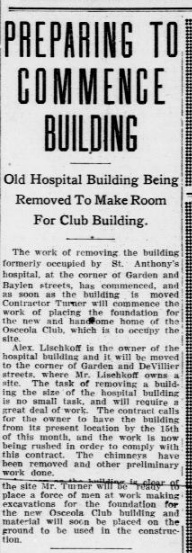
Notice what will be built at the corner of Garden and Baylen? The Osceola Club. Source: PJ, January 5, 1907.
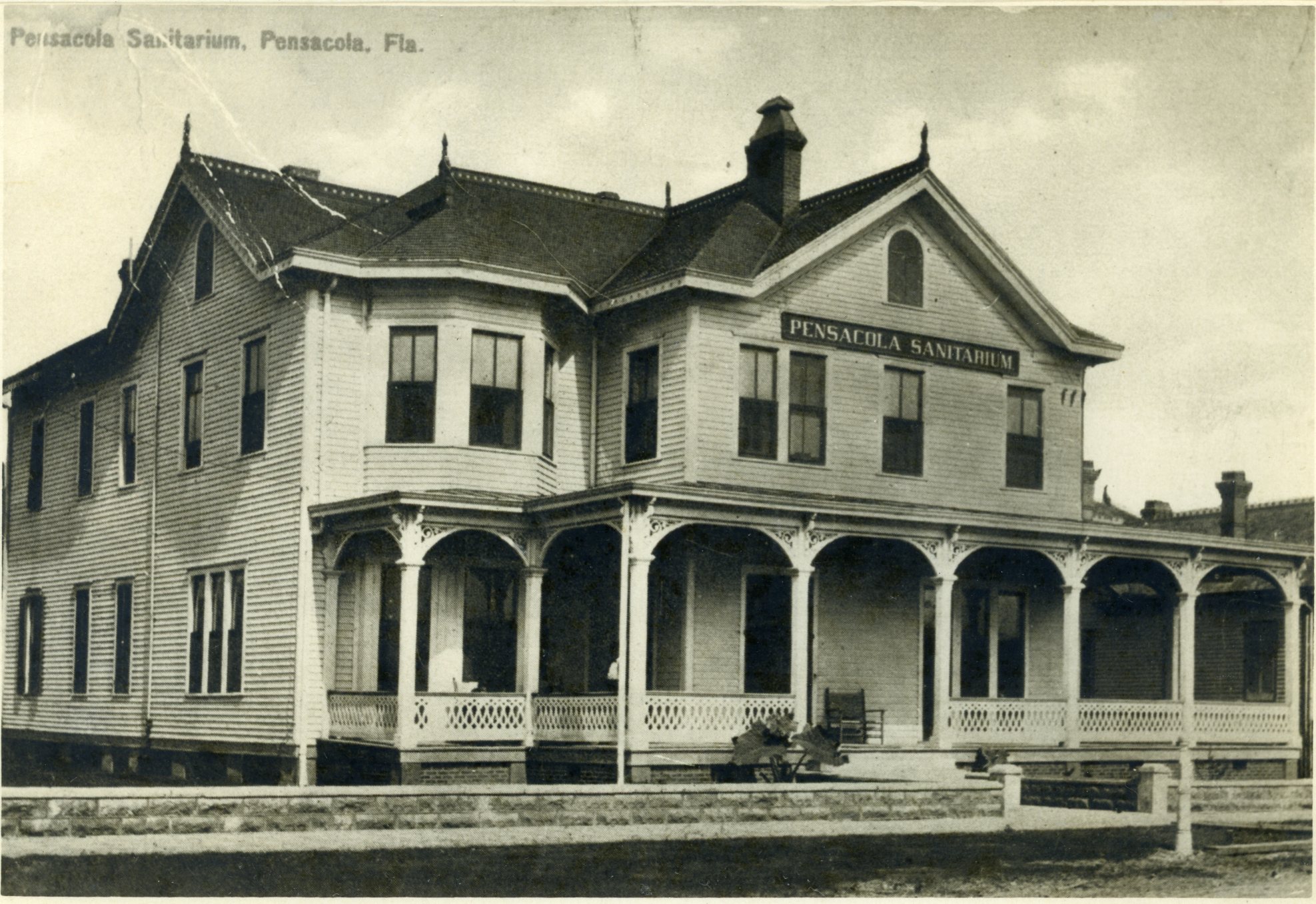
St. Anthony’s Hospital, also known as the Pensacola Sanitarium, at Garden and Devilliers. Source: Pensacola Historical Society
The new building that replaced St. Anthony’s Hospital at the corner of Garden and Baylen was none other than The Osceola Club, a very expensive, exclusive men’s bar and social club. Membership in The Osceola Club in the early 1900s would have been limited to the equivalent of millionaires only today. Emmett certainly could not have afforded the annual membership dues on the salary of Assistant District Attorney in 1907 (which was $1700* a year, later $3500 when he was made District Attorney).
But, he was a member of the club. Odds are that he was able to barter legal services for some of the officers and important members, as necessary, to cover the basic annual dues, which did not include meals or the bar tab.
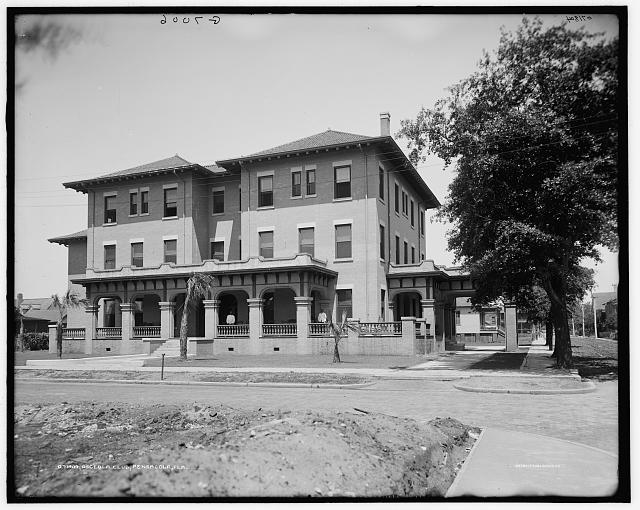
Osceola Club, corner of Garden and Baylen, taken around 1910. Located on the site of the original St. Anthony’s Hospital. Source: LOC.gov
The Osceola Club is significant in Emmett’s story. According to family history, it was a wealthy member of this club who introduced Emmett to drinking. Drinking, of course, is what led to Emmett’s death.
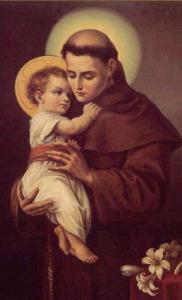
St. Anthony of Padua. Patron saint of the lost.
What I found a bit ironic about this story of The Osceola Club was the fact it was on the site of a property once dedicated to St. Anthony: The patron saint of lost things, lost people, lost faith. People often invoke St. Anthony on behalf of loved ones lost to alcoholism.
Like Emmett.
The Osceola Club is no longer at the corner of Garden and Baylen. Today, there’s a Bank of America office on that site.
*$1,700 was the equivalent of about $34,000 a year in 2015 dollars.
Speaking of architecture, the workshop I am taking on story architecture is going well. Likewise, I am almost finished with a test of MindMeister, which I probably will use in the development of chapters in Emmett’s book.
I’m trying not to get over-organized in structuring Emmett’s story, but I like the idea of an interactive graphic map that I could manipulate easily as new information becomes available, or, if I need to tear down/rebuild a scene in a chapter.
More to come, folks. Stay tuned.
Categories: Book Florida History Interesting & Odd Recommended Sources

jsmith532
Professor,
Communication, Arts, and the Humanities
The University of Maryland Global Campus
 Tell my story.
It’s interesting that the Osceola Club property was dedicated to a saint. Later the building became Catholic High School. After a new high school was built, St. Michael’s Elementary School moved in for a few years. I went to school there as an elementary school student (1959-1960), but by that time, the building was leaking and the floors were beginning to rot. The top floor had already been abandoned.
Regarding the old Elks Lodge on Garden Street, the Elks relocated to the building that was the Brent Family home at 200 West LaRua. (I remember it from my childhood, growing up on Spring Street.) The Elks placed a large elk statue on the raised lawn near the corner of LaRua and Spring Streets. Much later, that building, minus its lovely front porch and other details, became the Roy Jones, Jr. Gym. Now all of the building is gone.
The building in question was originally Winter Rest, a hotel or long-term residence, but was bought by Dr. Warren E. Anderson and others in late 1899. Adding onto the back of the building, it was opened as St. Anthony’s Hospital and Sanitarium around May 1900. (A description can be found at The Pensacola News, Thurs. May 3, 1900, p. 1.) In addition to treatment of patients, the hospital also provided initial training for nurses. (See, “People and Events,” The Pensacola Journal, Tues. Jan. 17, 1905, p. 6, and “High Honors For A Pensacola Lady,” The Pensacola News, Sat. June 13, 1903, p. 5.)
While the hospital had a contract for the city for a certain number of beds, ultimately, “the large amount of charity work in the city make[d] it impossible to conduct an institution of this kind on a self-sustaining basis.” (“Pensacola Will Be Without A Hospital,” The Pensacola Journal, Wed. Jan. 17, 1906, p. 8.)
The Osceola Club bought the property in December 1905. In January 1907, the building was moved from the corner of Garden and Baylen to the corner of Garden and DeVilliers.
In June 1907, Mrs. C. E. Smith and daughter, of Florala, who had run the Belmont hotel, leased the former St. Anthony’s hospital building with the intention of converting it to a hotel. (“Tersely Told,” The Pensacola Journal, Wed. June 26, 1907, p. 3.) It’s not clear whether or not that happened, but in January 1909 it was re-opened by a new owner(s) as a hospital, the Pensacola Sanitarium.